
Soil Fundamentals and Field Description
Each NRTG course includes free, lifetime admission. Enrol once – come back anytime.
Description
Understanding how to identify and describe soils in the field is a foundational skill for environmental and natural resource professionals. This two-day online course introduces participants to the fundamentals of soil formation, identification, and standardized field description techniques used in natural resource management.
The course combines concise, instructor-led online sessions with guided, self-directed field exercises completed in each participant’s local area. This flexible format allows learners to immediately apply concepts in real-world settings.
Participants will build a strong understanding of soil-forming processes while developing practical field skills, including identifying parent materials, describing soil horizons, and completing soil descriptions using standard Canadian methods. Clear instruction, structured field guidance, and ongoing online support ensure participants can confidently apply these skills independently.
This course is ideal for students, technicians, and professionals seeking flexible, applied field skill development.

This course is approved for 10 Continuing Education Credits (CECs) under the Society for Ecological Restoration’s (SER) Certified Ecological Restoration Practitioner (CERP) Program. Participants are responsible for uploading their certificates at ser.submittable.com to receive CECs.
Program Outcomes
Upon successful completion, participants will be able to:
- Describe the dominant factors and processes involved in soil formation and soil horizon development.
- Identify major soil parent materials and relate them to landscape and ecosystem context.
- Conduct standardized field soil descriptions independently, including soil texture, coarse fragment estimation, structure, root presence, and horizon boundaries.
- Identify the three dominant soil humus forms in the field.
- Describe the basic structure of the Canadian System of Soil Classification (CSSC).
Prerequisites
This is an introductory‑level course, and there are no prerequisites. Students with prior knowledge or experience in geoscience, physical geography, or environmental field skills may be able to access more in‑depth aspects of the course content.
Certification
To successfully complete the Soil Fundamentals course, participants must attend the full course and complete a desktop exercise and a field exercise. If a participant has barriers to completing the field exercise, alternative options may be approved by the instructor.
Who Attends?
Course participants typically include field technicians, biologists, Indigenous partners, and other current and aspiring environmental professionals. This course is particularly suited for individuals looking to move into Terrestrial Ecosystem Mapping (TEM) or other related environmental and natural‑resource projects.
How do I attend?
This course is available for individual registration via our website schedule, or by contract to community groups or organizations as a private delivery. To schedule a private delivery, please contact us well in advance of your preferred start date.
What should I bring or supply?
Required for Online Sessions
- Computer with a stable internet connection
- Pen/pencil and paper
Equipment List for Field Exercises (Afternoons of Days 1 & 2)
Participants should plan to be outside for up to 3 hours.
- Waterproof field notebook and pencil
- PDF of provided materials (printed or digital)
- Shovel or trowel
- Water bottle
- Camera or smartphone
- Soil horizon markers (golf tees, popsicle sticks, toothpicks, etc.)
- Appropriate clothing for field work
- Suitable all-weather, waterproof boots
- Google Earth Pro (free download)
- Compass (optional)
- GPS (optional)
Instructor Profile
Melissa Dinsdale, P.Geo
Professional Geoscientist
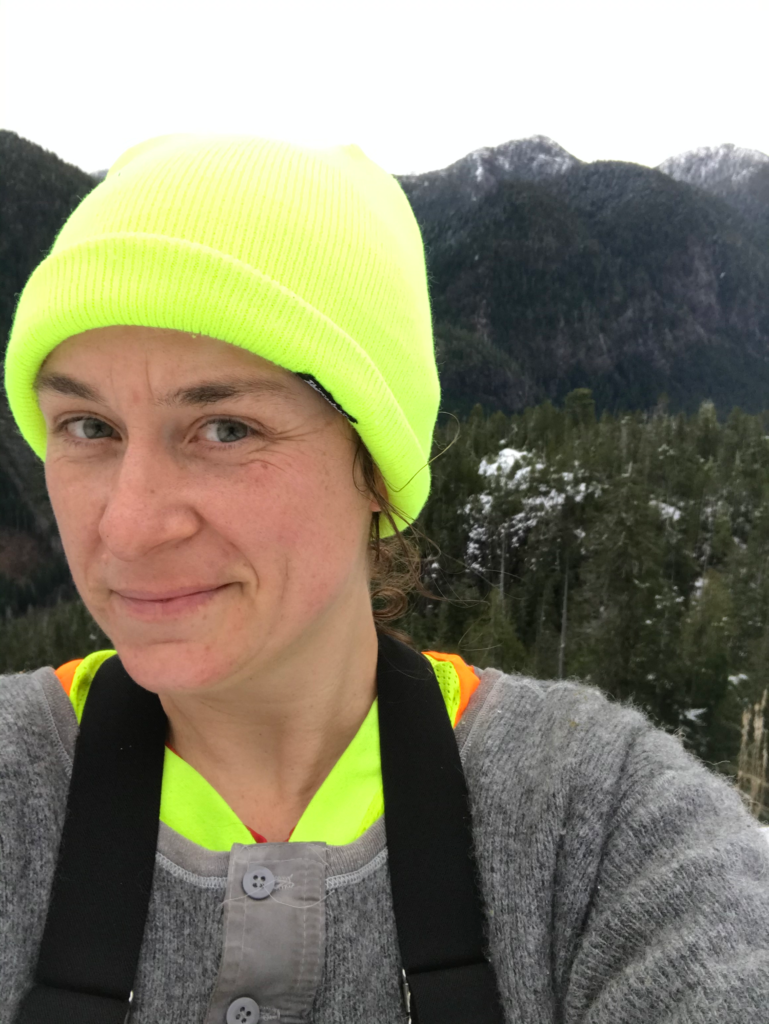
Melissa Dinsdale, P.Geo. is a Professional Geoscientist and field instructor whose work includes terrain stability assessments, sediment delivery analysis, resource road design, and Karst Field Assessments for forestry clients on Vancouver Island and throughout B.C. Melissa has a strong academic background in geomorphology, particularly within glaciated terrain, and she has worked extensively in coastal and karst landscapes. She also has additional experience in applied geophysics and terrestrial ecosystem mapping (TEM) projects.
Melissa is currently pursuing a M.Sc. in Environmental Practice and a diploma in Ecological Restoration. She has instructed at several institutions in geomorphology, soils, and hydrology, and brings a clear, applied teaching style that supports students in developing practical field skills they can confidently apply on their own.