
Habitat Restoration Technician Program — Aquatic Ecosystems and Lake Restoration – May 4th -7th, 2026 – Online
-
05/04/2026 - 05/07/2026
9:00 am - 4:00 pm Pacific Time
Location: Fully online
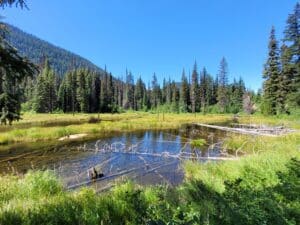
Aquatic Ecosystems and Lake Restoration is a four-day course that provides participants with a comprehensive understanding of the concepts, principles, and practical approaches used in restoring aquatic ecosystems. Through interactive instruction, case studies, and applied learning, participants will explore the drivers of change in lakes and watersheds, the functions and services of aquatic systems, and the techniques used to support lake health and resilience in Canada.
The first day of the course introduces key terms in aquatic restoration, the history and philosophy of the field, including Indigenous and Two-Eyed Seeing perspectives, as well as the ecological functions, services, and key drivers of change in aquatic systems in Canada. Participants will also apply the eight restoration principles to real-world projects.
Over the remaining days, participants will examine how watershed characteristics, Best Management Practices (BMPs), and in-lake interventions influence water quality and habitat. The course also addresses potential challenges and unintended consequences of restoration efforts and provides practical tools for assessing lake conditions.
Graduates of this course will develop a strong foundation and practical insight to guide their continued learning and participation in ecological restoration activities. Completing this course counts towards Habitat Restoration Technician Program (HRTP) certification once the remaining weeks are completed.
Program Outcomes
Upon successful completion of this program, you will be able to:
- Describe foundational concepts in aquatic restoration, including key terms, history, philosophy, and Indigenous and Two-Eyed Seeing perspectives.
- Explain aquatic ecosystem functions, services, and drivers of change, including pollution, land use, and climate change.
- Apply the eight restoration principles to aquatic projects.
- Describe how Best Management Practices (BMPs) and common in-lake restoration techniques influence lake and watershed water quality and habitat.
- Evaluate restoration outcomes and potential challenges, using tools such as contaminant mass balances, water residence time, and Trophic State Index.
What should I bring or supply?
You will need:
- Computer
- Stable internet access
- Pen and paper
 | This course is approved for 10 Continuing Education Credits (CECs) under the Society for Ecological Restoration’s (SER) Certified Ecological Restoration Practitioner (CERP) Program. Participants are responsible for uploading their certificates at ser.submittable.com to receive CECs. |